
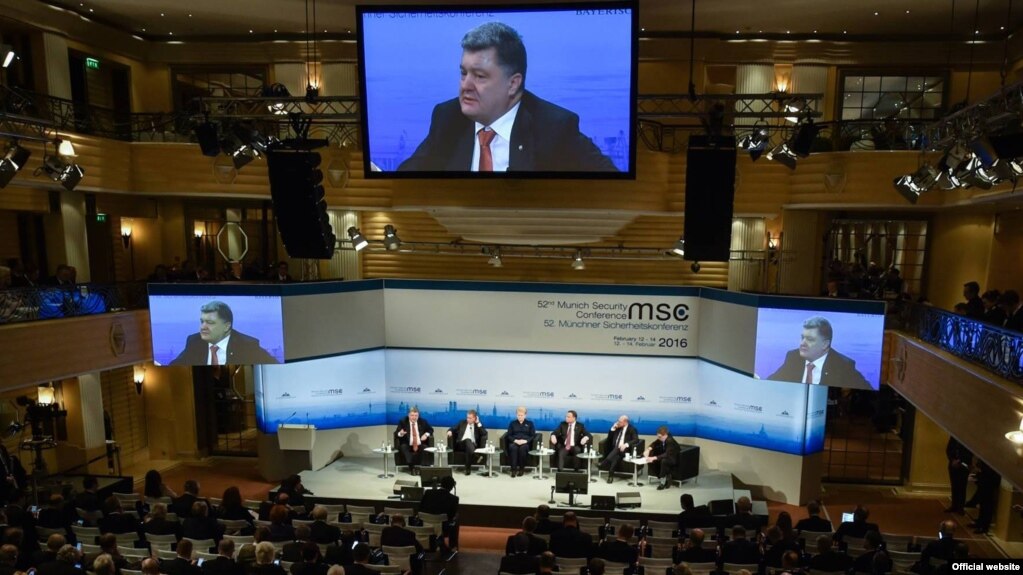
MUNICH — The battered relations between Russia and the West is once again be at the forefront as senior officials gather for a high-profile annual security conference whose chairman warns that the world has moved toward “the brink of a significant conflict.”
This year’s Munich Security Conference, which kicked off on February 16, comes amid a formidable array of challenges facing the global community, including North Korea’s nuclear saber-rattling, the stalemate in the war in eastern Ukraine, and the conflict in Syria.
In his opening comments, conference chairman Wolfgang Ischinger warned that the world faces a “dire reality” and has moved toward the brink of a “major interstate conflict.”
“We have too many unresolved crises, instabilities, and conflicts,” Ischinger told the audience.
In a report released ahead of the three-day conference, Ischinger said he sees tensions between Washington and Pyongyang, strained NATO-Russia ties, the possible “unraveling” of landmark nonproliferation treaties, and “rising nationalism and illiberalism” as “weakening some of the core principles of the international order.”
Organizers said the conference agenda places an emphasis on the European Union’s role in the world as well as the bloc’s relations with Moscow and Washington, whose leaders are not slated to attend.
Russian President Vladimir Putin, who used his lone appearance at the conference, in 2007, to excoriate the United States for what he portrayed as its dangerous and destabilizing role in the world, is dispatching Foreign Minister Sergei Lavrov to Munich.
U.S. President Donald Trump’s secretary of defense, Jim Mattis, and national security adviser, HR McMaster, are among those to represent Washington at the conference, as is CIA Director Mike Pompeo.
Ukraine Looms Large
The war between Russia-backed separatists and Kyiv’s forces in eastern Ukraine will also loom large in Munich.
Both the U.S. special envoy for the conflict in Ukraine, Kurt Volker, and his Russian counterpart, Vladislav Surkov, last month offered guardedly optimistic assessments of their recent talks on a possible UN peacekeeping mission to end the fighting, which has killed more than 10,300 since April 2014.
Volker, who is set to attend the Munich conference, recently noted more “openness” from the Russian side on the issue but said he conveyed to Surkov “a very strong sense of disappointment and frustration in Washington that Russia has done absolutely nothing to end the conflict, or to withdraw its forces.”
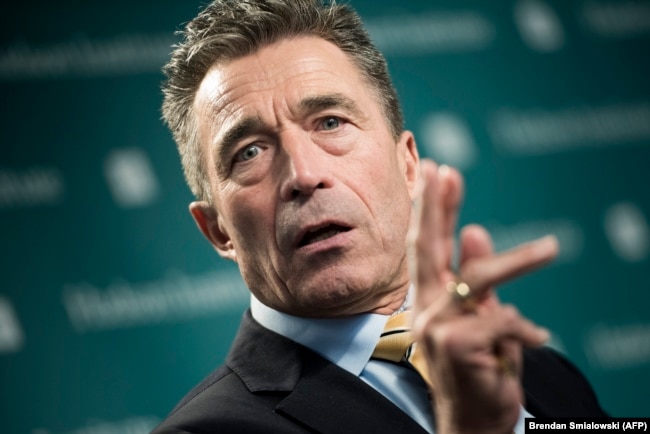
Former NATO Secretary-General Anders Fogh Rasmussen, who currently serves as an adviser to Ukrainian President Petro Poroshenko, is set to present Volker and other officials in Munich with a report he commissioned urging a UN force of some 20,000 peacekeepers in eastern Ukraine.
Poroshenko, who is provisionally scheduled to deliver a speech at the conference later on February 16, spoke by telephone with Putin earlier this week.
Poroshenko told reporters in Kyiv on February 15 that the two leaders also discussed the prospects for UN peacekeepers in eastern Ukraine, as well as the Minsk accords — September 2014 and February 2015 cease-fire pacts that have failed to hold.
Ischinger said last week that peace talks in the so-called Normandy Format — consisting of Germany, France, Russia, and Ukraine — would be held on the sidelines of the Munich conference.
Russian Foreign Ministry spokeswoman Maria Zakharova said on February 15 that Lavrov would meet with his counterparts from Ukraine, Germany, and other countries in Munich but that possible Normandy Format talks there were still “being worked out.”
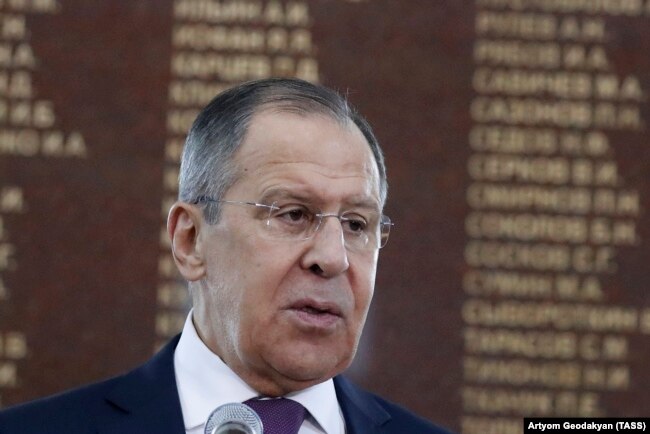
Vladimir Frolov, a Moscow-based foreign affairs analyst, said Lavrov was unlikely to deliver anything unexpected in his conference speech, which has been preliminarily scheduled for the early afternoon on February 17, but that a Normandy Format meeting could prove fruitful.
“Surkov and Volker made a lot of progress in Dubai,” Frolov told RFE/RL, referring to the meeting between the U.S. and Russian envoys in the Persian Gulf city last month. “Things potentially might start moving there.”
Russian ‘Hope Of Partnership’
In Munich, Lavrov may stress that Moscow and Washington should cooperate in spheres of common interest and portray the nadir in U.S.-Russian ties as the fault of the previous U.S. administration under President Barack Obama, said Thomas Wright, director of the Center on the United States and Europe at the Brookings Institution, and Washington-based think tank.
“I don’t think they will throw up their hands in dismay at the Trump administration just yet because I don’t think they’ve given up hope” of improved relations, Wright told reporters in a call organized by Brookings this week ahead of the Munich conference.
“I think they still hold out hope of partnership with Trump at some stage, although obviously the [U.S.] administration is divided on that,” Wright added.
Trump’s administration has largely stayed the course of his predecessor’s hard line on Russia’s 2014 seizure of Ukraine’s Crimean Peninsula and backing of the separatists in eastern Ukraine, which both triggered U.S. and EU sanctions targeting Moscow.
But while Moscow continues to chafe over Western sanctions and the Trump administration insists it is taking a tough approach to Moscow, there have been signals that the two sides are trying to ratchet down tensions.
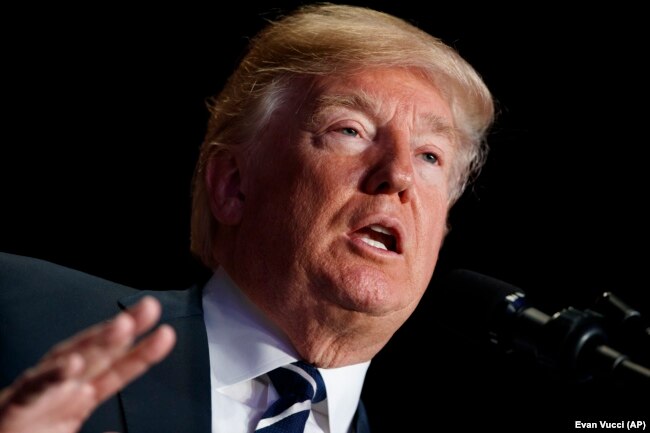
Trump in December publicly touted bilateral cooperation with Moscow that both the White House and the Kremlin said had prevented planned terrorist attacks in St. Petersburg. And three directors of Russia’s main intelligence and espionage agencies — one of whom was hit with a U.S. travel ban over the Crimea annexation — traveled to Washington last month for meetings with top officials there.
Trump also surprised and angered many in Washington by declining to announce new sanctions targeting Moscow in conjunction with congressionally mandated measures aimed at pressuring the Kremlin over Russia’s military involvement in Ukraine and Syria, its alleged meddling in the 2016 U.S. presidential election, and other matters.
Russian officials, meanwhile, have responded cautiously to the confirmed deaths of multiple Russian mercenaries killed in Syria last week in a clash with U.S.-backed forces, largely avoiding the anti-American rhetoric that frequently permeates officialdom in Moscow.
‘Great Power Competition’
Michael O’Hanlon, a senior foreign policy fellow at Brookings, noted in the call with reporters this week that the Munich conference follows the Trump administration’s recent unveiling of its national defense and security strategies portraying China and Russia as “revisionist” powers and outlining an increased focus on “great power competition.”
“Hearing more about what it means to make Russia and China our main national security emphases will, I think, be a question a lot of people will want to explore with Secretary Mattis and General McMaster, and anybody else from the U.S. delegation” in Munich, O’Hanlon said.
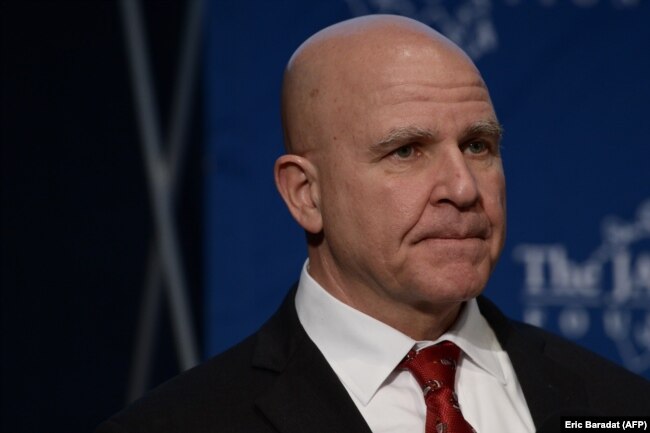
McMaster is scheduled to speak immediately following Lavrov’s speech in the early afternoon on February 17.
Other world leaders and top officials scheduled to address the conference include British Prime Minister Theresa May, European Commission President Jean-Claude Juncker, French Prime Minister Edouard Philippe, Israeli Prime Minister Benjamin Netanyahu, Iranian Foreign Minister Mohammad Javad Zarif and Turkish Prime Minister Binali Yildirim,
Other global challenges set to be discussed at the Munich conference include defense cooperation in the EU and NATO, the impact of technology on democracy, and nuclear security.
source:-.rferl.

