When it comes to Artificial Intelligence (AI), there have always been two school of thoughts. On one hand, Elon Musk, Founder of SpaceX and Co-founder of Telsa, believes that “AI could create an ‘immortal dictator'” and that AI is a fundamental risk to the existence of human civilisation.
On the other hand, Google billionaire, Eric Schmidt, believes that Elon is “exactly wrong” about AI and that the technology will make humans smarter.
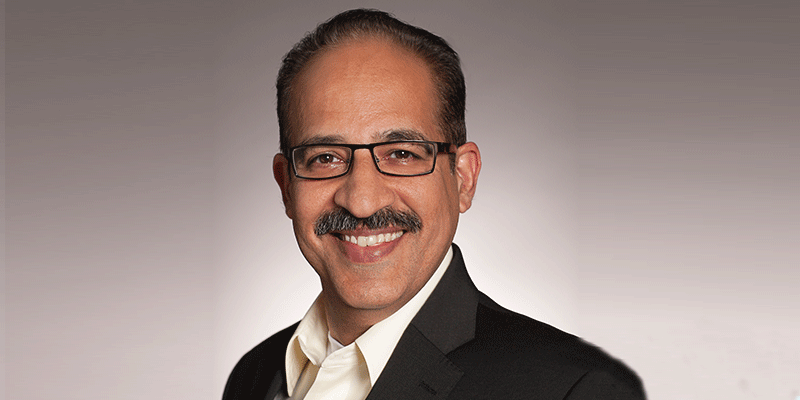
Vikas Arora, IBM Cloud and Cognitive Software Leader, IBM India/South Asia, is of the opinion that there is an absolute necessity to have cognitive or AI security tools to keep pace with the advancing threats and growing workforce shortage facing the industry today.
According to Institute of Business Value’s survey, adoption of cognitive security solutions is currently at 7 percent and is expected to grow to 21 percent in the next two to three years.
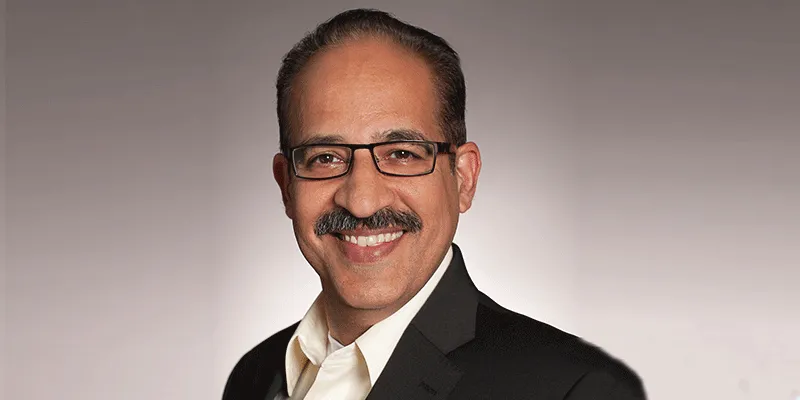
In a conversation with YourStory, Vikas, who now leads IBM’s cloud and congnitive software business and key transformation projects, talks about the complex landscape of cybersecurity today and why AI is a smarter solution for it.
YourStory: Tell us about the cybersecurity landscape in India.
Vikas Arora: Essentially, there is a lot of focus on cybersecurity right now. The regular industries began this journey some time back, and cybersecurity is now evolving and maturing.
Starting with end point security and vulnerability management, it has now moved on to incident management. Response management, governance, and financier management are the next levels.
Enterprises are already going into the next phase which is why we are starting to bring technology like cognitive applications on cybersecurity. There is another big focus around having risk in governance and tightening the processes.
We are also seeing that it (cybersecurity) is increasingly becoming a board-level issue. Now we are getting requests from the CEOs and CIOs. There are companies with guidelines that say that cybersecurity is mandated to be a board-level discussion – not just awareness but how you train yourselves for cyber incidents. The level of seriousness and visibility has definitely gone up several notches.
The other part is skills. We are seeing a lot of efforts is being put into training people on cyber security.
YS: What is the need for AI security rules?
VA: In most organisations, we have a mix of conventional system and modern (security) systems –that have come up as a part of digital transformations. Still, there is a large IT footprint on legacy systems. The biggest problem with some of these systems is that they are unable to scale to the size or requirements of a modern organisation.
Modern organisations are connected to their customer and partners in many different ways than before. The boundaries are blurring.
A few years ago, organisations could basically put themselves and their IT behind a firewall and it was thought they were protected. But now since the digital outreach is so multifaceted, you can’t firewall a system as you could before. This makes security very tough.
The complexity has increased since organisations are connected to their partner system and customer systems. Then there is mobility and IoT (Internet of things). This makes the landscape of what one has to protect, very complex.
Despite organisations having analysts, cyber experts, and defenders, they need a heightened sense of cybersecurity, which can aid some of these resources or expertise that exist, to be able to be more alert towards threat. That’s where AI comes in.
AI provides that heightened sense. AI, as a system, learns from sources that are much bigger than what an analyst can possibly learn from.
Today, there is a lot of focus on incident management and response management. In incident management, you are tracking thousands of incidents in a single day and it is not always possible to keep track of and analyse everything. There has to be a fool-proof defence mechanism in the system.
[“source=yourstory”]