Introduction
Keeping a home clean does not have to come at the expense of the environment. As more London households become conscious of waste, indoor air quality, water consumption, and the chemicals used around children and pets, eco-friendly cleaning is becoming a practical alternative to conventional cleaning routines.
Green cleaning is not simply about replacing every product in your cupboard with an expensive “natural” alternative. It is about making thoughtful choices: using safer ingredients, reducing unnecessary packaging, limiting waste, conserving water and energy, and choosing cleaning methods that are effective without creating avoidable environmental impact.
For homes across London, where space can be limited and indoor living is often a major part of daily life, a practical green-cleaning routine can make a noticeable difference.
What Is Eco-Friendly Cleaning?
Eco-friendly cleaning involves cleaning practices and products designed to reduce harm to people and the environment.
A greener approach can include using concentrated or refillable products, reusable cloths, biodegradable ingredients where appropriate, and efficient cleaning techniques. It can also mean simply using less product and avoiding unnecessary disposable items.
Importantly, “natural” does not automatically mean safe or environmentally friendly. Some natural substances can irritate the skin, damage surfaces, or be harmful when used incorrectly. Green cleaning should therefore focus on safety, effectiveness, and responsible use rather than marketing labels alone.
Choose Safer Cleaning Products
When buying cleaning products, look beyond attractive packaging and broad claims such as “green” or “natural.”
Look for products that clearly explain their ingredients and provide appropriate safety information. Where possible, choose products with recognised environmental certifications, concentrated formulas, refill systems, or minimal packaging.
For everyday household cleaning, you may not need a different specialised product for every surface. A small collection of appropriate cleaners can often handle most routine tasks.
Using fewer products can reduce both household expenses and packaging waste.
Use Reusable Cleaning Tools
Disposable wipes and paper towels are convenient, but using them for every cleaning task can generate a considerable amount of household waste.
Reusable microfiber or washable cleaning cloths can be used repeatedly and washed between cleaning sessions. Reusable mop heads and washable dusting tools can similarly reduce the number of disposable products entering the waste stream.
Keep separate cloths for different cleaning tasks, particularly areas such as kitchens and bathrooms, and wash them appropriately after use.
A simple colour-coding system can make it easier to prevent cross-contamination.
Make Smart Use of Everyday Ingredients
Some household ingredients can be useful for simple cleaning jobs.
For example, diluted white vinegar can help remove certain types of limescale from appropriate surfaces, while bicarbonate of soda can provide mild abrasive action for some cleaning tasks.
However, these ingredients are not universal cleaning solutions.
Never mix bleach with vinegar, acids, ammonia, or other cleaning products. Dangerous gases can be produced by incompatible combinations.
Also check manufacturer guidance before applying acidic or abrasive substances to surfaces such as natural stone, delicate finishes, or specialist materials.
The safest approach is to understand the surface first and use the appropriate cleaner.
Reduce Plastic Packaging
Packaging is an important part of sustainable household cleaning.
Instead of repeatedly buying new plastic bottles, consider refill stations, concentrated products, dissolvable cleaning tablets, or larger refill containers where practical.
Some products are designed to be diluted at home, meaning one container can replace several ready-to-use bottles.
Before purchasing a refill product, consider whether the packaging is genuinely recyclable or reusable in your local waste system. Recycling rules can vary between London boroughs, so check your council’s current guidance rather than assuming that every type of plastic will be accepted.
Save Water While Cleaning
Water is another area where small changes can make a difference.
Avoid leaving taps running while wiping surfaces or washing cleaning tools. Use a bucket when appropriate and use only enough water to complete the task effectively.
When cleaning windows, floors, kitchens, or bathrooms, planning the job beforehand can reduce unnecessary rinsing.
Cleaning more efficiently can also save time. Removing dust and loose dirt before using a wet cleaning method means less water and cleaning solution may be required.
Improve Indoor Air Quality
Eco-friendly cleaning is also connected to indoor air quality.
Strong fragrances and volatile chemicals in some cleaning products can contribute to unpleasant indoor air conditions, particularly when products are overused or ventilation is poor.
Use cleaning products according to their instructions and provide adequate ventilation where recommended.
Avoid using more product than necessary. More cleaner does not automatically mean a cleaner home.
For regular dust removal, ventilation, and general housekeeping, simple mechanical cleaning methods can often accomplish a great deal without introducing additional chemicals.
Be Careful With Disinfectants
Disinfectants have an important role in situations where they are genuinely required, but they do not need to be used on every surface every day.
Routine cleaning removes dirt and many microorganisms from surfaces. Disinfection may be appropriate in specific circumstances, particularly where there is a known contamination concern or where hygiene requirements demand it.
Follow the manufacturer’s instructions carefully, including contact time and dilution requirements. Using excessive disinfectant does not necessarily provide better results and can increase chemical exposure and waste.
Green Cleaning for London Flats
Eco-friendly cleaning can be especially useful in London’s flats and apartments.
Limited storage space makes a minimalist cleaning cupboard practical. Instead of keeping dozens of specialised products, choose a small number of versatile, suitable cleaners and reusable tools.
Compact refillable bottles can also reduce storage requirements.
For households with limited ventilation, avoiding unnecessary use of strongly fragranced products can be particularly sensible. Opening windows when appropriate and following product safety instructions can help maintain a more comfortable indoor environment.
Choose Professional Cleaners Carefully
If you use a professional cleaning service, ask about its environmental practices.
Questions worth asking include:
- Do you use eco-friendly or lower-impact products?
- Do you offer refillable or concentrated cleaning solutions?
- Do you use reusable cloths and mop heads?
- How do you manage cleaning-product waste?
- Can you avoid unnecessary single-use materials?
- Do you have procedures for safely handling chemicals?
A genuinely environmentally conscious cleaning service should be able to explain its practices rather than relying solely on vague “green” marketing language.
Avoid Greenwashing
Greenwashing occurs when an environmental claim makes a product or service appear more sustainable than the available evidence supports.
Terms such as “eco,” “green,” and “natural” can be broad and sometimes provide little useful information.
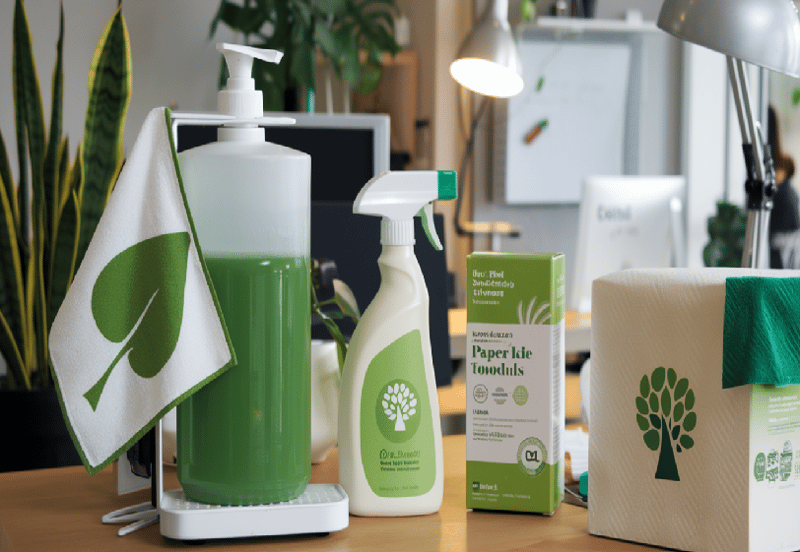
Look for specific claims and supporting information. A product that explains its ingredients, packaging, certifications, disposal instructions, and environmental approach is generally easier to evaluate than one that simply uses green colours and leaves.
Consumers should also remember that the most sustainable option is not always the product marketed as the greenest. Sometimes using an existing product efficiently and for longer is better than replacing it unnecessarily.
Create a Simple Green Cleaning Routine
A sustainable cleaning routine does not have to be complicated.
Start by reducing unnecessary products. Replace disposable cleaning materials with reusable alternatives where practical. Choose concentrated or refillable products when they make sense. Use appropriate quantities, conserve water, and safely dispose of unwanted chemicals according to local guidance.
You can also organise cleaning around regular maintenance rather than waiting for heavy dirt to build up. Frequent light cleaning can sometimes require less intensive chemical use and less effort.
Conclusion
Eco-friendly home cleaning in London is less about finding a perfect “green” product and more about developing responsible habits.
Using safer and appropriate cleaning products, choosing reusable tools, reducing packaging, conserving water, improving ventilation, and avoiding unnecessary chemicals can create a cleaning routine that is kinder to both your household and the environment.
The most effective approach is also the simplest: use only what you need, choose products thoughtfully, reuse whenever possible, and clean efficiently.
Whether you live in a compact London flat, a family home, or a larger property, small changes can gradually reduce waste and unnecessary chemical use without compromising cleanliness.