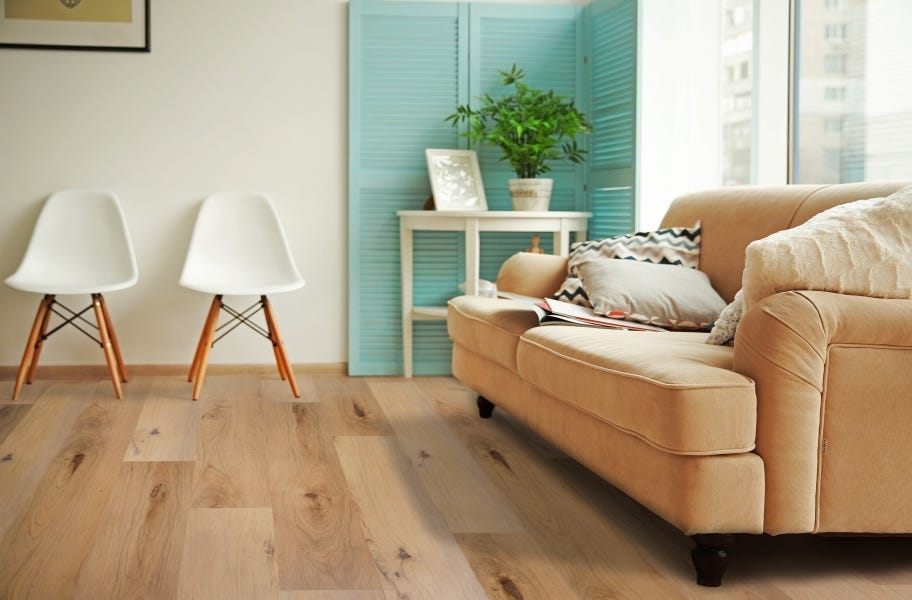
Luxury vinyl flooring has become a popular choice for homeowners who want the appearance of hardwood, stone, or tile without the maintenance and cost associated with many traditional flooring materials. It is available in a wide range of colors, patterns, textures, and plank sizes, making it suitable for bedrooms, living rooms, kitchens, hallways, and other areas of the home.
Before you start shopping, however, it helps to understand how luxury vinyl flooring is made, what types are available, and which features actually matter for your space.
What Is Luxury Vinyl Flooring?
Luxury vinyl flooring is a type of resilient flooring designed to replicate the appearance of natural materials such as hardwood and stone. Unlike older vinyl sheet flooring, luxury vinyl typically comes in individual planks or tiles.
The flooring generally consists of several layers. A protective wear layer sits on top, while the decorative layer creates the wood or stone appearance. Beneath that are structural layers that provide stability and support.
Luxury vinyl is commonly available as Luxury Vinyl Plank (LVP) and Luxury Vinyl Tile (LVT). LVP is designed to resemble wood planks, while LVT usually imitates stone or ceramic tile.
LVP vs. LVT: Which One Should You Choose?
The choice between LVP and LVT largely depends on the look you want.
LVP is a good option if you like the appearance of hardwood. It comes in designs inspired by oak, maple, walnut, and other wood species.
LVT is generally chosen when you prefer the appearance of stone or tile. It can recreate patterns resembling marble, slate, limestone, or ceramic tile.
Both can offer similar practical benefits, so your decision may come down to design preferences, installation method, and the requirements of the room.
Pay Attention to the Wear Layer
One of the most important specifications to check when shopping for luxury vinyl flooring is the wear layer.
The wear layer is the transparent protective surface over the decorative design. A thicker or more durable wear layer can provide better resistance to everyday wear, scratches, stains, and scuffs.
For a low-traffic bedroom, you may not need the same level of protection required in a busy hallway or family room. If you have pets, children, or heavy foot traffic, choosing a flooring product with a more durable wear layer can be worthwhile.
Don’t judge flooring quality solely by thickness. Look at the manufacturer’s specifications and warranty as well.
Consider the Overall Thickness
Total plank or tile thickness is another specification you’ll encounter while shopping. Thicker products can feel more substantial underfoot and may provide additional stability.
However, thicker does not automatically mean better. The construction of the individual product matters, including the quality of its core, backing, wear layer, and locking system.
Also check the finished floor height if you’re replacing an existing floor. Changes in height can affect doors, transitions, appliances, and connections to neighboring rooms.
Choose Between Different Installation Methods
Luxury vinyl flooring can be installed in several ways.
Click-lock flooring uses a locking mechanism that allows planks or tiles to connect together. It is often suitable for floating installations, where the flooring isn’t permanently attached to the subfloor.
Glue-down flooring is secured directly to the subfloor with adhesive. It can be useful in certain commercial or high-traffic applications and may offer a more firmly attached feel.
Some products are designed for peel-and-stick installation, although their construction and performance can differ from higher-quality luxury vinyl products.
Always check the manufacturer’s installation requirements before purchasing.
Don’t Ignore the Subfloor
Even high-quality luxury vinyl cannot completely compensate for a poor subfloor.
The installation surface should generally be clean, dry, stable, and appropriately level for the flooring product. Uneven areas can affect the finished appearance and may cause problems with locking systems or seams.
Before shopping, inspect the existing floor and determine whether repairs or preparation will be necessary. This can significantly affect the total project cost.
Think About Water Resistance
Luxury vinyl is often marketed as water-resistant or waterproof, but these terms should be understood in the context of the complete flooring system.
Many luxury vinyl products handle everyday moisture well, which makes them attractive for kitchens, bathrooms, laundry areas, and entryways. However, water can still cause problems if it reaches the subfloor through gaps, edges, or installation issues.
Check the manufacturer’s specific water-resistance claims and installation requirements rather than assuming every luxury vinyl product performs identically.
Look at the Design in Your Actual Room
Flooring can look very different in a showroom compared with your home. Lighting, wall colors, furniture, and room size can change how a color appears.
Before making a final decision, request samples if possible. Look at them during both daylight and artificial lighting.
Also consider plank width and pattern. Wider planks can create a more spacious appearance, while smaller formats may work better with certain room layouts.
Calculate the True Cost
The price per square foot is only part of the budget. Your total project cost may include underlayment, adhesive, subfloor preparation, transition pieces, trim, delivery, installation, and removal of the old flooring.
When calculating how much material to purchase, account for cutting and installation waste. The exact allowance depends on the room’s shape and the installation pattern.
Getting a complete estimate before purchasing can help prevent unexpected expenses.
Check the Warranty
A manufacturer’s warranty can provide useful information about how the flooring is expected to perform.
Look at what the warranty covers, how long it lasts, and whether there are specific requirements for installation and maintenance. Some warranties may have conditions related to subfloor preparation, installation methods, moisture, or commercial use.
Don’t assume a longer warranty automatically means a better product. Read the actual terms.
Final Thoughts
Luxury vinyl flooring can offer an appealing combination of style, durability, easier maintenance, and installation flexibility. But the best choice depends on your room, traffic level, moisture exposure, subfloor condition, and budget.
Before you start shopping, compare the wear layer, overall construction, installation method, water-resistance specifications, warranty, design, and total installed cost. Taking the time to evaluate these details can help you choose flooring that looks good and performs well for years to come.